1 (888) 333-0491
[email protected]
Book Appointment
Bronson Heritage Chiropractic Bronson Heritage Chiropractic
  • Home
  • About
    • Meet the Team
    • Social
    • Testimonials
  • Specialties
    • Pregnancy Chiropractic
    • Newborn & Pediatric
    • Family Chiropractic
    • Postpartum Chiropractic
  • Patients
    • Faq
    • Book Appointment
    • Discounts & Incentives
    • Gift Cards
    • Order Supplements
    • Privacy Policy
    • Healthcare Disclaimer
  • Areas We Serve
    • Aledo
    • Azle
    • Eagle Mountain
    • Fort Worth
    • Lake Worth
    • Saginaw
    • Springtown
    • Weatherford
  • Blog
  • Contact us

What is the Vagus Nerve and Why is it Important?

Patient Case:

Greg, 50

Symptoms: Trouble sleeping, difficulty losing weight, severe depression, anxiety, constipation, and feelings of exhaustion.

Scans showed his Vagus Nerve was not functioning properly. Greg was stuck in sympathetic dominance, which is fight/flight. His nervous system was not in a state of ease and rest. Photos compare a Vagus Nerve that is not functioning properly vs. a well-balanced nervous system.

The Vagus Nerve, or vagal nerves, are not something we normally learn about in school. But they are the most important nerves in the human body. We should know about them.

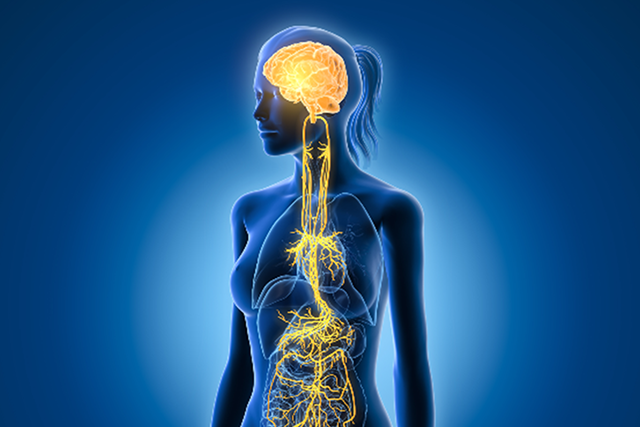
The Vagus Nerve is very long and intricate, starting in the upper neck and extending down the neck and into the torso. It carries smells, sights, tastes, and sounds and controls muscles and glands. It has both motor and sensory functions and serves as the main nerves of your parasympathetic nervous system (involuntary like digestion, heart rate, immune function, etc.). So, the Vagus Nerve carries on two-way communication with your body and brain to report back and control important functions.

How the vagus nerve affects organ systems. (Image courtesy of http://www.TheOdysseyOnline.com)

The Vagus Nerve controls:

  • Eyes – sensory
  • Ears – sensory
  • Throat – sensory
  • Tongue – sensory
  • Heart – sensory
  • Lungs – sensory
  • Swallowing – motor
  • Speech – motor
  • Digestion – involuntary
  • Breathing – involuntary
  • Heart Rate – involuntary
  • Inflammation
  • Emotions

The Vagus Nerve can supply the body with health and wellness if it’s working right. If it’s not, it can cause all kinds of health issues. It can affect sleeping, eating, intestinal issues, anxiety, emotional issues, seizures, and more.

In Western culture, we are not taught to look for natural causes and remedies. But in the chiropractic profession, that’s exactly what we do. We look for stress in the nervous system and correct the root cause. That way, the body can function properly and heal itself the way nature intended.

VAGUS NERVE ISSUES IN CHILDREN

Children are particularly susceptible to presenting symptoms caused by Vagus Nerve disruptions. The kind of disruptions that the typical medical community may try to treat with prescription drugs or surgery, while chiropractors treat them naturally.

Some patients can struggle significantly with health issues that can be traced to the Vagus Nerve as the root cause. With proper treatment, some of these issues can subside quickly.

Because of how the Vagus Nerve is situated, it can be easily injured during birth and cause problems such as dysautonomia, which we will illustrate below.

VAGUS NERVE ISSUES IN ADULTS

The Vagus Nerve controls energy levels, sleep quality, mental health, heart rate, blood pressure, respiration, gut health, digestion, reproduction, and more.

THE PROBLEM

Many doctors dismiss conditions like colic, ear infections, constipation, and other common childhood maladies as “normal.” If normal means frequent, then maybe they’re right. But if 25% of children have problems that could be prevented or treated naturally, wouldn’t you want to help these children?

Conditions like:

  • Colic
  • Reflux
  • Constipation
  • Bedwetting
  • Sleep issues 
  • Chronic ear infections
  • Frequent sickness
  • ADD
  • ADHD
  • OCD
  • Anxiety
  • Depression
  • Autism
  • Seizures
  • Speech disorders
  • Autoimmune disorders
  • Delayed motor milestones
  • Balance issues

If your child is struggling with these issues, it’s important to get them scanned to see how their nervous system is functioning. A pediatric chiropractor can help by removing the neurological interference and naturally allowing the body to function at its best.

HOW CHIROPRACTIC CAN HELP

Typical advice for treating Vagus Nerve problems includes medication, massage, and relaxation techniques. Some try natural approaches like diet, essential oils, aromatherapy, etc. But the proper chiropractic adjustment can be a powerful treatment that often goes unmentioned by the medical community.

While traditional medicine continues to make positive strides, and natural therapies prove to be helpful, proper chiropractic care can be a powerful ally in treating problems caused by a Vagus Nerve disruption.

INSIGHT SCANNING – SEE THE PROBLEM

The best first action is to get your Insight Scan from Bronson Heritage Chiropractic and see the problem for yourself.

The Insight Scan is a neurological scan and visual report that can help Dr. Bronson find out if subluxation or dysautonomia could be the issue. The scans take less than 30 minutes and include useful information for you and the doctor.

The scans do not emit any harmful radiation, are safe for everyone- newborns and pregnant women included and take 5 minutes. The scans show tension and inflammation patterns, along with heart rate variability, which measures stress on the nervous system.

Schedule Appointment

Developmental Milestones

Some children have problems with their developmental milestones. Things like standing, walking, rolling over, sitting up, and crawling all have rough estimates of when children should be doing them.  But when a child’s developmental milestones are delayed, many parents and health providers simply hope for the best and encourage delayed action when there could be other issues going on.

A child’s neurological control of motor development and digestive function are so intertwined that things like constipation could have an underlying condition treatable by chiropractic. 

Some parents struggle to help their children perform some very basic functions like going to the bathroom, walking on their own, etc. It can be a frustrating time. Luckily, there are things parents can do that don’t include drugs or other artificial interventions.

Neurologically-focused pediatric chiropractic care can help children’s bodies regulate motor functions, balance, mood, and more. 

Example patient: Scarlett, 16 months old 

Symptoms – Extreme balance issues, extreme flexibility, inability to stand and inability to walk on her own. Scarlett’s mom had a gut feeling something wasn’t right, but was told, “all babies are flexible!” by their pediatrician when voicing her concern.

With a PT referral 2 months out, they decided to try chiropractic.

During her gross motor assessment, Scarlett exhibited signs of low tone in her extremities and was hyper-flexible. Scarlett had to use a very wide stance to walk and needed to hold on to something or someone because her balance was not there. Her spinal assessment and insight scans showed several areas of misaligned vertebrae and nervous system stress, especially at the top of her neck which determines balance and muscle tone. 

Scarlett enjoying her time at BHC

Results – After 1 adjustment Scarlett was able to balance standing on her own, was less constipated and seemed more at ease. After 4 adjustments she was taking steps on her own! 

Scarlett after adjustments and balance work from Dr. Bronson

DEVELOPMENTAL MILESTONES
Developmental milestones are important physical and behavioral signs of human development in children, to help caregivers make sure things are progressing as expected. Also, some developmental milestones are not motor-related but fall in the realm of sleep, immune system function, and digestion that can be easily overlooked. These are linked through the central and autonomic nervous systems.

CATEGORICAL LIST OF DEVELOPMENTAL MILESTONES: 
It may be easier to break down all of the developmental milestones by category, to put them into perspective.

Motor Skills– Control of head, rolling over, crawling, walking, jumping, etc. 
Social Skills – Smiling, laughing, getting involved, interacting with others, initiating playtime, and making eye contact. 
Cognitive Skills – Reasoning, solving problems, understanding basic communication, making decisions, etc. 
Emotional & Behavioral Functions – Sleeping, Mood, learning, self-regulating emotions, being patient, the ability to listen and follow directions, etc. 
Digestive Function– Latching, swallowing, breastfeeding, going to the bathroom, etc. 
Immune Function – Frequent illness, fevers, coughing, congestion, recovery time from illnesses, teething, etc. 

Healthy sleep patterns is one of the most important and indicative functions because children need the proper sleep cycles to help develop everything else. And, even though every child is different, there are still some markers that can signal that everything is ok or that their may be trouble.

INDICATIONS THERE MAY BE DELAYS TO ADDRESS: 

1 month: 
Trouble turning head from side-to-side
Trouble latching & nursing
Trouble swallowing
Digestion issues
Consistently leaning their head to one side or the other
Stiffening neck frequently
Arching back frequently
Excessive crying
Trouble pooping

3 months: 
Trouble eating
Moving head from side-to-side
Frequently arching back
Excessive crying

12 months:
Can’t sit or stand on their own

Anytime:
Banging head against things
Skips crawling and goes straight to standing stiff
Can’t sleep
Can’t poop

WHAT WE WANT TO SEE:

  • Enjoyable tummy time
  • Pushing up
  • Raising head
  • Sitting up
  • Proper hand-eye coordination
  • Smiling and babbling
  • Imitating sounds
  • Easily poops daily
  • Infrequent crying (a happy baby)

As our children develop, more and more happens and the list of developmental milestones grows rapidly.
In fact, your child’s brain will be about 60% larger at only 12 months than it was at birth.

It’s important not to use the information above rigidly. Every child is different and the big picture is that they can sleep, eat, stand and walk, make eye contact, and look generally at ease. If this isn’t the case, a pediatric chiropractor can perform an Insight Scan and other tests to develop a care plan. Trust your gut instincts. If you thing something is wrong, let’s take a look.

WHY SOME KIDS HAVE DEVELOPMENTAL MILESTONE DELAYS

Developmental milestone delays can happen for a variety of reasons and some of them are simple to fix. Because of the stress of birth, some children have a spinal subluxation after delivery, which can alter neurodevelopment timelines. A subluxation is simply a vertebra not lined up and may cause resistance and limited range of motion, affect nerves and supply to organs or muscles, etc. Sometimes there may be structural issues causing subluxation in the first place. Tension, for instance, can cause pulling to one side or the other causing a subluxation. 

A subluxation causes the nervous system to tighten up in certain areas, which can cause headaches, tension, sore muscles, and more.
Newborns react by having trouble with their basic beginning developmental milestones. Latching problems, reflux, constipation, crying, and colic could be an indication the child needs to be checked for subluxation.

WHAT CAUSES SUBLUXATION?
Don’t get too hung up on this one because everyone will develop subluxation many times in their lives. Those who have never seen a chiropractor just live with it.
Infant Subluxation can be caused by:
Maternal distress (the stress and emotional challenges for the mother during pregnancy) 
Incorrect positioning (breech, cord wrapped)
Birth interventions (C-section, forceps, vacuum, and labor induction) 

Physical stress on the mother can impact an unborn infant’s head and neck, nerves, muscles, and create the situation causing subluxation. Trauma, even mild trauma, is an important topic and can cause delayed developmental milestones. However, Sometimes the mother has nothing to do with it and the process of birth is the singular cause of subluxation for the infant.

While the CDC and medical establishment have adopted more lax developmental milestone goals, chiropractors and many other health providers remain steadfast to help your child excel at life. You will never hear a pediatric chiropractor say, “don’t worry, they’ll grow out of it”, unless it’s truly the case.

HOW CAN A PEDIATRIC CHIROPRACTOR HELP? 
First, we will gather information and examine the child. Then, we will perform an Insight scan to visually see areas of stress in your child’s body. Then, we will discuss treatment options with you before we do anything.

Read More About Insight Scanning Technology

Insight scans only take minutes and they are completely safe and non-invasive.

You deserve to be heard and you deserve to have your wishes respected.
Bronson Heritage Chiropractic was founded to give parents the tools to provide quality care to children. We look forward to helping your family grow healthier.

  • 1
  • …
  • 5
  • 6
  • 7
Side Bar
Recent Posts
  • Chiropractic vs Medication: What’s the Difference?
  • What Is a Subluxation and Why Does It Take Time to Correct?
  • Understanding Chiropractic: Beyond Pain Relief: Part 1 of 5
  • Staying Healthy During Mountain Cedar Season in North Texas
  • A Christmas Reminder: Rest, Restore, and Reset
Categories
  • General
  • General Health
  • Pediatric Chiropractic
  • Physical Therapy
  • Postpartum Chiropractic
  • Pregnancy Chiropractic
  • Uncategorized
Bronson Heritage Chiropractic

Please visit us on social media, call, or just come by. We'd love to hear from you.

Copyright © Bronson Heritage Chiropractic 2024. All rights reserved.
Treatment information is for educational purposes only and applies only to licensed chiropractors. It is not intended for the general public to use chiropractic techniques for self treatment or the treatment of others. Read our full Healthcare Disclaimer.
Developed by William Bronson