
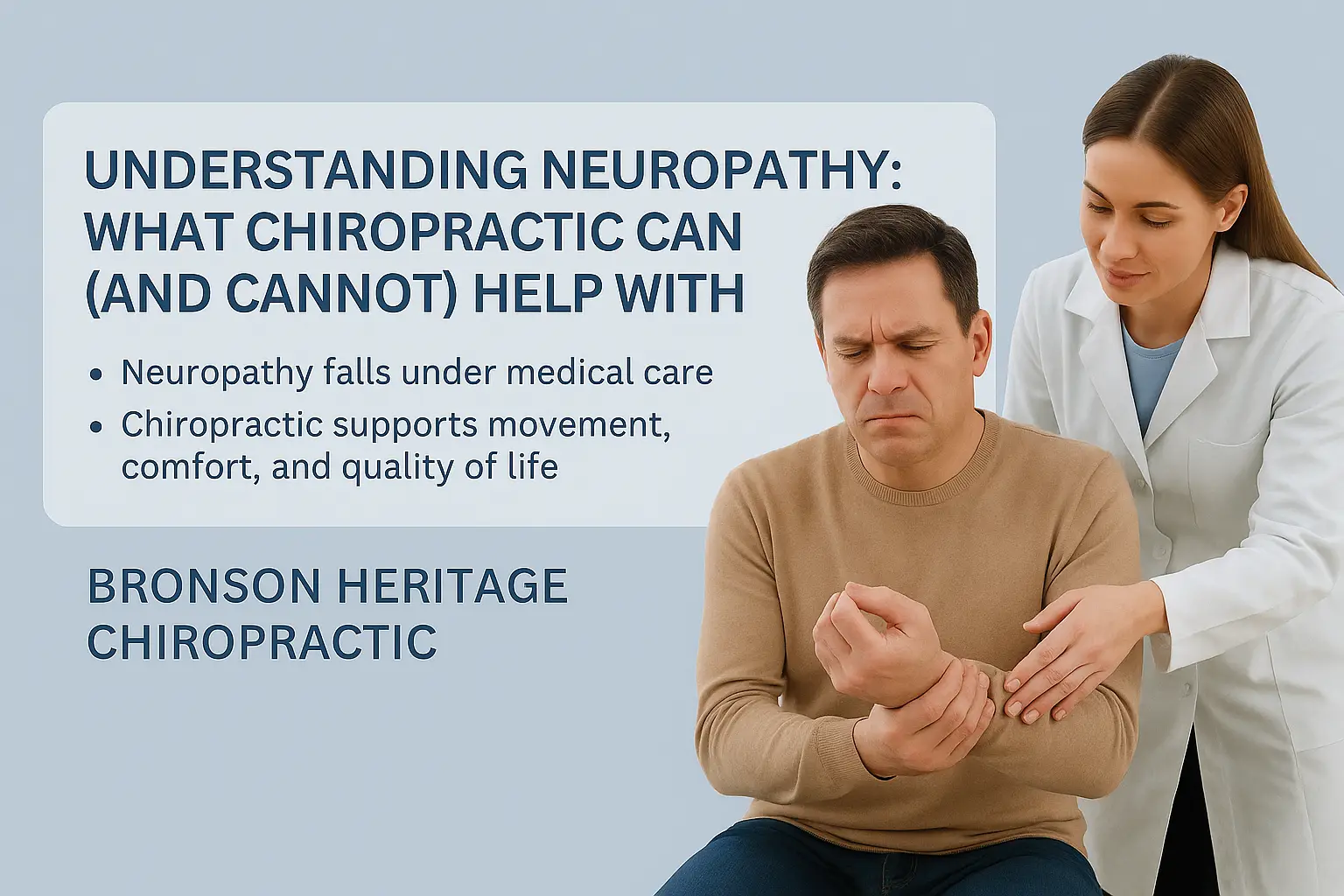
A Patient Guide from Bronson Heritage Chiropractic
Neuropathy is a condition that affects millions of people, often causing burning, tingling, numbness, or discomfort in the hands or feet. Many people look for information about how different types of care, including chiropractic, may support their overall comfort and mobility.
Because neuropathy involves the nervous system, it is highly regulated in terms of how Texas chiropractors may communicate about it. At Bronson Heritage Chiropractic, we want to give you clear, honest, evidence-based information about what neuropathy is, how it is medically managed, and the supportive role chiropractic care may play for movement, posture, and quality of life.
This article summarizes guidance directly from the Texas Board of Chiropractic Examiners (TBCE) December 2025 report so our patients receive accurate, transparent information.
What Is Neuropathy?
According to the TBCE, neuropathy, especially diabetic peripheral neuropathy, is considered a disease of the nervous system, typically caused by metabolic or circulatory issues.
Symptoms often include:
numbness or tingling
burning or electric sensations
decreased sensation
changes in balance or walking patterns
The TBCE describes neuropathy as often appearing in a “stocking and glove distribution,” meaning symptoms show up in hands and feet due to peripheral nerve involvement.
Because neuropathy is a medical condition that affects the nervous system, its diagnosis and medical treatment fall under the scope of physicians.
What Chiropractic Cannot Claim About Neuropathy
The TBCE is extremely clear on this point.
❌ Texas chiropractors may NOT:
claim to treat neuropathy
claim to reverse, cure, or heal neuropathy
advertise neuropathy “programs,” “protocols,” or “packages” that imply medical improvement
suggest that chiropractic care affects the underlying disease process
These prohibitions come from the TBCE’s concern about misleading neuropathy promotions and complaints from patients about deceptive marketing practices. While we understand chiropractic is a powerful tool for the prevention and aid in mitigating many health conditions, we simply cannot, under the law, make claims that are not approved by the powers that govern our profession.
✔️ What Chiropractic Can Help With (Fully Within Texas Rules)
Texas chiropractic law allows chiropractors to evaluate and improve the biomechanics of the musculoskeletal system and address the subluxation complex, including their influence on the nervous system.
This means we can support:
joint mobility
posture and balance
compensatory movement patterns
muscle tension and stiffness
gait mechanics
overall comfort during daily activities
➡️ These are non-medical, non-disease claims.
➡️ They focus on movement, structure, alignment, and function.
➡️ They do not imply any effect on neuropathy itself.
Many patients with neuropathy experience changes in how they move, often because walking, balance, or sensation feels different. Chiropractic care can help address the secondary musculoskeletal stresses that come from altered movement patterns.
Examples of compliant statements:
“Chiropractic care supports joint mobility and healthy movement patterns.”
“We help patients maintain comfort and alignment as they navigate daily activities.”
“For patients with neuropathy, we can support posture, balance, and movement ease.”
“Chiropractic care can be part of a whole-body approach that includes your medical providers.”
This does not mean that patients with neuropathy won’t notice improvements. It simply means we cannot claim that it will.
TBCE Requirements for Any Neuropathy-Related Discussion
The Board emphasizes that chiropractors must follow:
🔹 Rule §75.1 — Informed Consent
Patients must be told:
the reasonable expectations of chiropractic care
the chiropractor’s scope
when referral or co-management is appropriate
🔹 Rule §77.4 — No misleading claims
No promises, no exaggerated claims, no guaranteed results.
🔹 Evidence-based, transparent communication
The TBCE specifically warns against advertisements that “mislead” or overpromise neuropathy results.
How We Support Patients with Neuropathy: Safely and Transparently
At Bronson Heritage Chiropractic, we collaborate with your medical team when needed and stay firmly within the Texas scope.
Our goals for patients dealing with neuropathy include:
✔ Supporting comfortable movement
Neuropathy can change how a person walks or stands. We help identify and ease musculoskeletal tension that forms as compensation.
✔ Improving joint mobility
Stiffness or an altered gait can cause joints to become restricted. Gentle chiropractic adjustments help maintain mobility.
✔ Reducing muscular stress
When nerve sensation changes, muscles often work harder or unevenly. Chiropractic care supports balance and flexibility.
✔ Enhancing posture
Changes in sensation can affect standing and walking posture. We support spinal alignment to help reduce mechanical strain.
✔ Encouraging whole-body wellness
Stress management, hydration, movement, and lifestyle education can support your body’s comfort and function. Dr. Bronson may even recommend dietary changes that may help with inflammation, a leading precursor to many issues.
When Should Patients See Their Medical Doctor?
Because neuropathy is a disease of the nervous system, the TBCE notes that underlying causes like diabetes or circulatory issues require medical evaluation and treatment.
Seek medical care if you experience:
sudden increase in numbness
worsening foot or hand weakness
new balance problems
ulcers or wounds on feet/hands
uncontrolled blood sugar
Our Commitment to Transparency, Safety & Collaboration
The Texas Board of Chiropractic Examiners urges all chiropractors to uphold:
ethical business practices
evidence-based communication
proper informed consent
collaboration when conditions fall outside chiropractic scope (Page 2)
We take that responsibility seriously.
Our role is to support your movement, comfort, and quality of life, while ensuring that any underlying neuropathy is medically managed by your physician.
Book online for an appointment, or call us with questions about our services 888-333-0491